What we build at ForgeRock…

Since I’ve started working at ForgeRock, I’ve had hard times to explain to my non-technical relatives and friends, what we were building. But those days are over.

Thanks to our Marketing department, I can now refer them to our “ForgeRock Story” video :

Forgerock’s startup journey

Great article about ForgeRock and its CTO and founder, that tells a lot about the culture of the company: Forgerock’s startup journey.


Did you miss the 2014 IRM Summit ?

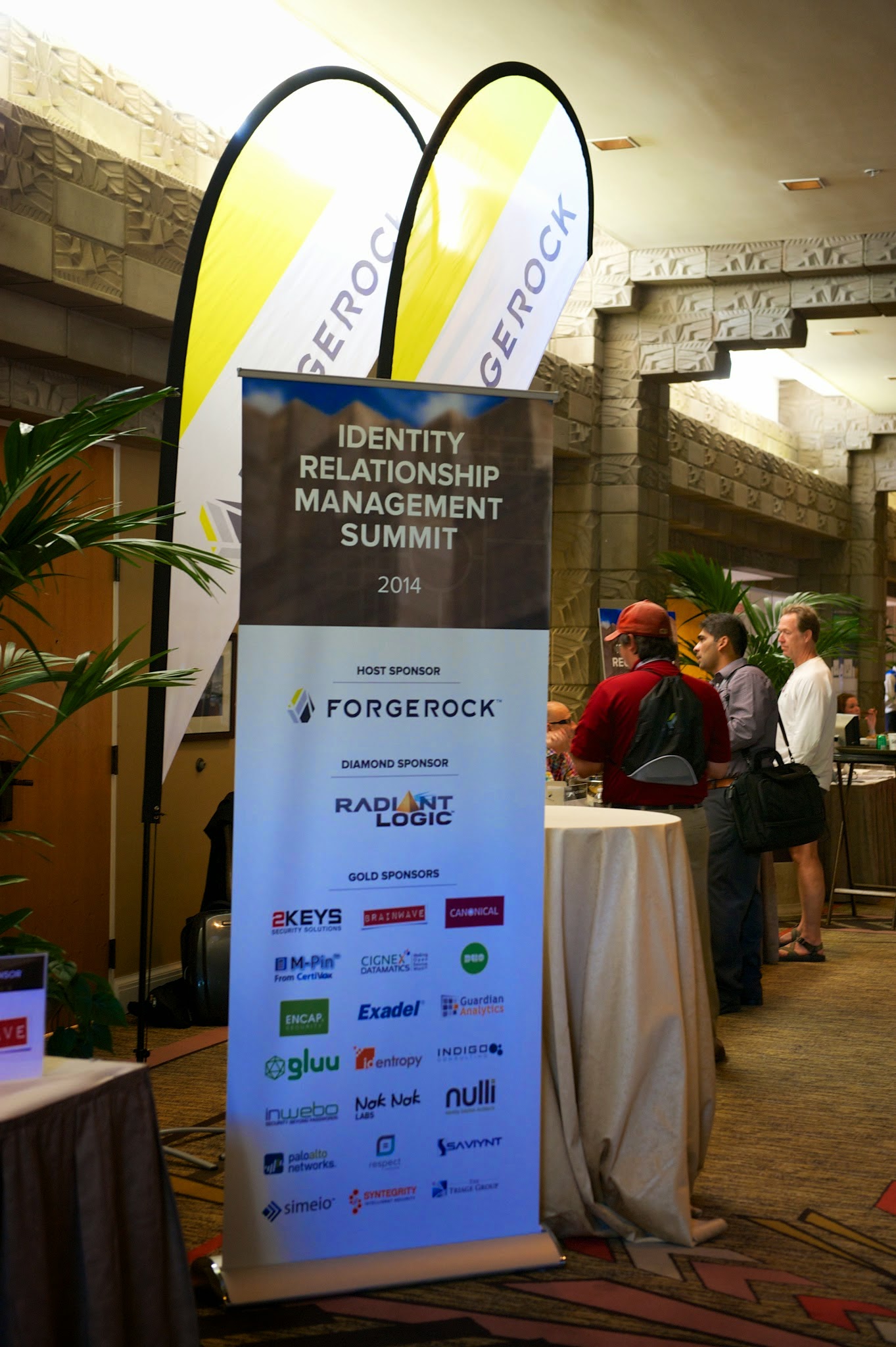
IRM Summit 2014Two weeks ago, the first IRM Summit took place in Phoenix AZ, at the amazing Arizona Biltmore. It was a great pleasure to meet with many friends and acquaintances, analysts and experts in the Identity space. Lots of conversations, ideas et food for thoughts !

If you haven’t been able to attend, or missed a session or two, you can watch the videos from the event :  https://www.youtube.com/user/ForgeRock/videos

And as usual, I’ve made all the photos that I’ve taken during the event available online, including the ForgeRock Partner event that happened the day earlier.

I hope to see you this fall at the European IRM Summit, in Luton Hoo, UK (more information should be available soon on the IRM Summit site or ForgeRock.com)

ForgeRock marketing team

Availability in OpenDJ Training in London, Week of June 23rd.

TrainingThe ForgeRock University department has scheduled an in person, instructor led training for the OpenDJ Administration, Maintenance and Tuning module, in London from June 23rd to June 26th 2014.

The 4 days training provides the perfect opportunity to learn in details everything you’ve ever wanted to know about the OpenDJ directory service and how to get the best of it.

The training is firmly confirmed but still have a few seats available. If you’re interested, you can register here.

See you next week at the IRM Summit…

Now that we have a new office in Grenoble, I can focus on the next big event : the IRM Summit starting on June 3rd, in Phoenix Arizona.

The summit agenda is amazing, and I’m really looking forward to meet the best industry experts, some of our partners, and some of our customers. If you haven’t registered yet, there might still be passes available. But don’t wait too much, it’s only a week away. See you in Phoenix !

We’ve moved !

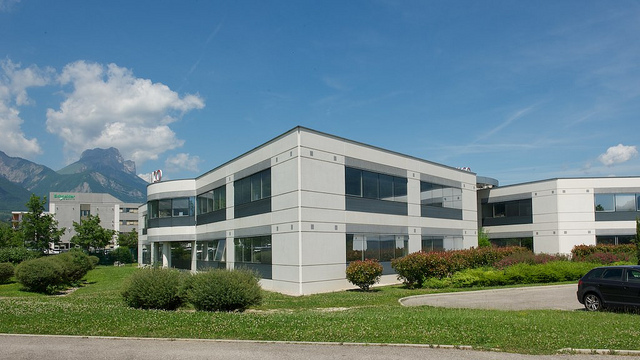
As ForgeRock is growing fast and we have a number of new hires joining us in the Grenoble Engineering Center, we’ve moved office for a larger space, still in the same building.

ForgeRock France new office building

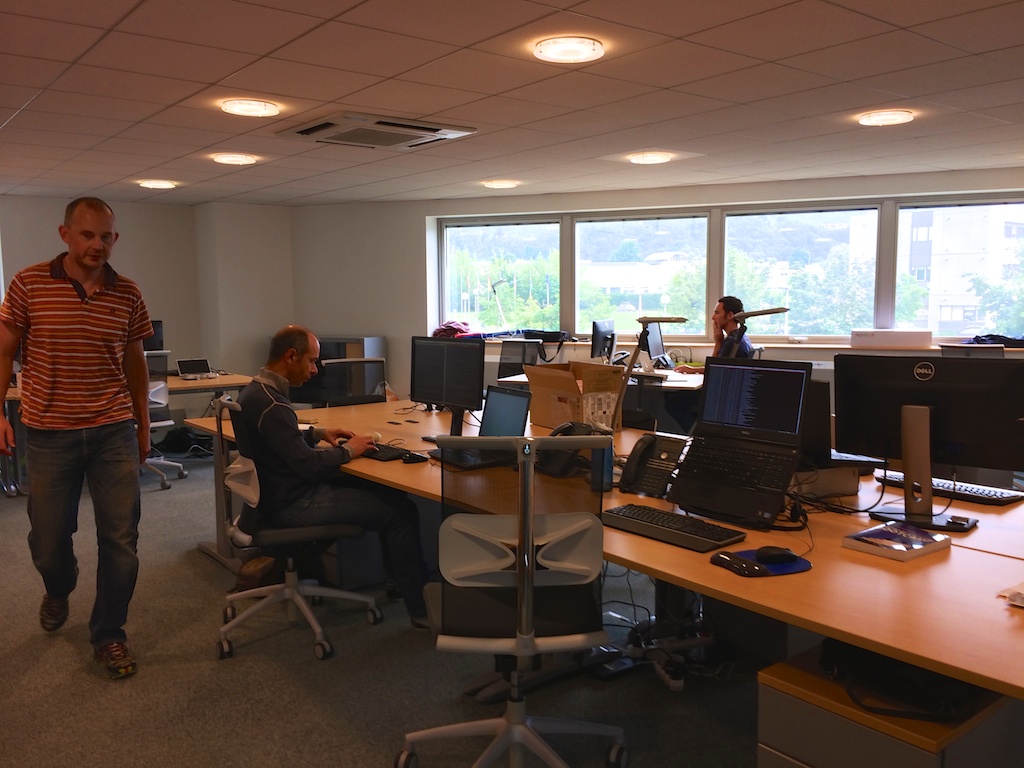
The new office has a large open space area where all engineers (dev, QA and doc) can work and exchange.
open space in ForgeRock Grenoble Engineering Center IMG_3150

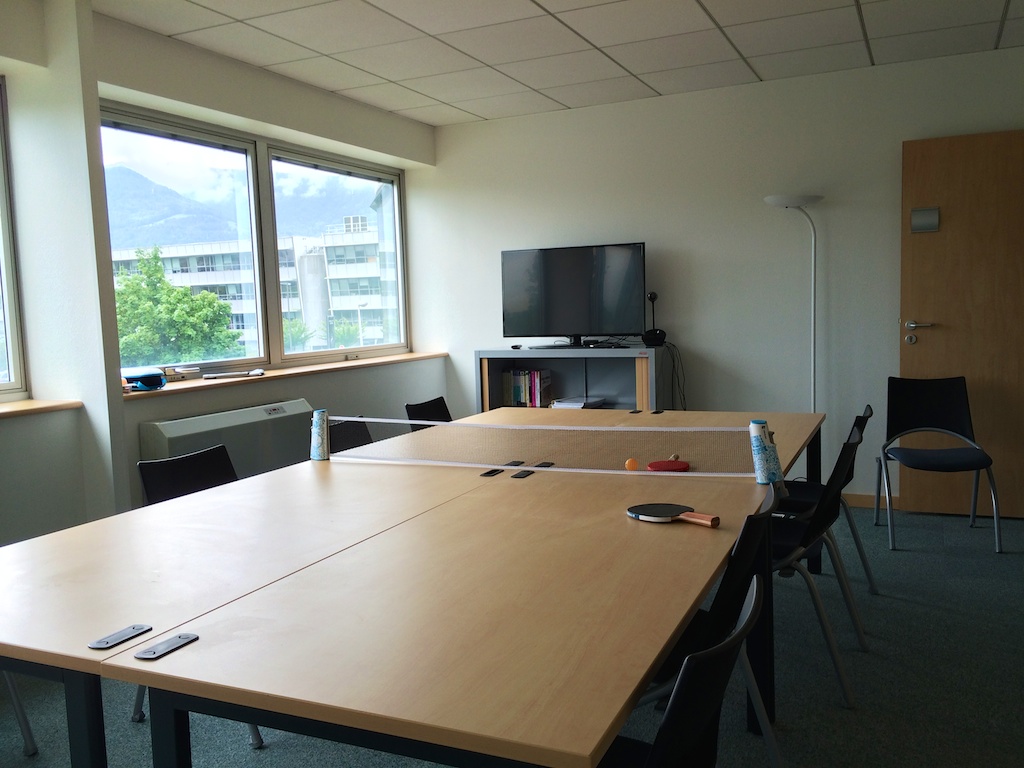
It also has a couple of smaller office for managers , and a decent meeting room, that has already been hacked 🙂

IMG_3151

ForgeRock engineering center meeting room Engineers in action !


And the good news is that the new office will allow us to hire even more, in the next months and years.

16 reasons to choose OpenDJ

Nice post by Emidio on some good reasons to choose OpenDJ for LDAP directory services.
Looking forward to discuss and integrate the Crowd compatible PBKDF2 password storage scheme in the OpenDJ project.

Emidio Stani's avatarSoftware Libero e non solo

For a client I needed to put in place an LDAP system to be connected with Atlassian Crowd (SSO), after doing a comparison with OpenLDAP,ApacheDS and OpenDJ I decided to go for OpenDJ for several reasons:

  1. It is open source released with CDDL 1.0 license; while Apache DS is released with Apache license and OpenLDAP with it is own license.
  2. it has worldwide commercial support, some here in Belgium; Apache DS has only one company and OpenLDAP has also it is worldwide support
  3. It is a fork of OpenDS like Oracle Unified Directory so you can still find common problems for  both products
  4. The project has a clear roadmap, also described in the wiki, also ApacheDS has it.
  5. The ForgeRock company provides also another SSO solution (OpenAM), so in case in a future I want to change SSO I can think to use it…

View original post 361 more words

Ansible roles for OpenDJ

My colleague Warren, who I had the pleasure to work with at Sun and again with ForgeRock, has been playing with Ansible and has produced 2 roles to install OpenDJ and to configure replication. Check Warren’s blog post for the details, or go directly to the Ansible Galaxy.

About LDAP Syntaxes and backward compatibility…

In the LDAP information model, a syntax constrains the structure and format of attribute values. OpenDJ defines and implements a large number of syntaxes (you can discover them by reading the ldapSyntaxes attribute from the cn=Schema entry).

But infrequently, we receive enquiries on an obscure and non standard syntax, often in the form of “I’m having an error importing schema from this or that legacy directory server”, with an error message that ends with “No such syntax is configured for use in the Directory Server”.

As syntaxes are constraining the structure and format of attribute values, they are implemented as code, specifically Java code in OpenDJ. It’s possible to implement new syntaxes by implementing the org.opends.server.api.AttributeSyntax abstract class, and installing the classes or the JAR in OpenDJ classpath. But often, it’s easier and more convenient to define a syntax by configuration, and OpenDJ offers 3 possibilities to define new syntaxes. In term of backward compatibility, I will only focus on the 2 main ones, by substitution and by pattern (the 3rd one allows to define enumeration of values).

With OpenDJ, you can define a new syntax by configuration and delegating the contraints to an already implemented syntax. A simple example is the URI syntax (which was defined is some very old schema with the OID  1.3.6.1.4.1.4401.1.1.1). A URI is really an ASCII string, and it might be sufficient to accept attributes with URI syntax to verify that all characters are pure ASCII. The standard syntax for ASCII strings is IA5String aka 1.3.6.1.4.1.1466.115.121.1.15.

ldapSyntaxes: ( 1.3.6.1.4.1.4401.1.1.1 DESC ‘URI’ X-SUBST ‘1.3.6.1.4.1.1466.115.121.1.15’ )

Insert the above line in the schema LDIF file before the attributeTypes, and you’re done.

The other option is to define the syntax as a pattern, using regular expressions. This could be better when willing to enforce additional constraints on an URI, for example, verifying that the URI is an LDAP one.

ldapSyntaxes: ( 999.999.999.1 DESC 'LDAP URI Syntax' X-PATTERN '^ldap://[-a-zA-Z0-9+&@#/%?=~_|!:,.;]*[-a-zA-Z0-9+&@#/%=~_|]' )

So the next time you are trying to import some legacy schema to the OpenDJ directory server, and you have an error due to missing syntaxes, you know what to do to quickly resolve the problem.

Save the date for the 2014 ForgeRock Identity Relationship Management Summit

The date has been set, the 2014 ForgeRock summit in United States will take place on the week of June 2nd, in Phoenix AZ.

Make sure you block the date in your calendar ! I hope to see you there.

And if you’re in Europe, don’t panic ! We are also planning an EMEA summit in the fall. The date and location will be announced later.

OpenDJ Backends and Multi-Tenant Services

OpenDJ, the Open source LDAP Directory service built on the Java platform, offer plenty of flexibility to administrators to setup their environment. One specific area is how to deal with multi-tenants and hosting data from different companies.

In OpenDJ, the data is organized in database backends -and there can be many database backends-, each capable of hosting many separated “Base DN”, aka naming context or suffixes (think about “dc=Coca,dc=com” and “dc=Pepsi,dc=com”).

So we are often asked the best practices around multi-tenants, and whether it’s preferable to put the baseDNs in a single backend or to separate them,  each one in a separate backend ?

Before we dive in the response, it’s important to understand that a database backend is actually a whole database environment and as such the smallest unit for backup and restore procedure. And also that indexes are configured at the backend level, so all indexes configuration are identical for all base DNs in a backend.

There are several good reasons for using a backend per tenant :

  • Backends can be placed in different filesystems and disks, allowing better scalability, consistent performance.
  • Maintenance done on a backend does not affect the other backends and thus the other tenants. It’s also possible to define a separate recurrent backup schedule per backend.
  • From a security and privacy point of view for the customer, separation of data is better. Even though ACI are meant to prevent one tenant to see the other’s data, having separated backends will also ensure that this is also the case when doing backups, exporting data to LDIF…
  • Also, if there is a need to have different configuration of indexes for each tenant, because of the applications accessing the data, or because of the structure of the data itself, then they must be stored in separated backends.

All of this seems to lead to the point that each tenant should be in its own backend. Why supporting multiple base DNs in a single database backend then ? Well, when the data sets are small and consistent, from an administration point of view, it is much easier to deal with a single backend than many of them. It reduces time for configuration, monitoring of disk space and tend to optimize memory usage. It also simplifies the database cache management, as there is a cache per backend and the overall size must not exceed the JVM memory size, nor the machine’s one. As a single backend is able to scale to tens of million entries, there is no real penalty here.

As a conclusion, when deploying OpenDJ for multi-tenant services, make sure you properly evaluate your requirements for performance, security and privacy before configuring the server. But of course, you can also choose to mix backends with multiple tenants and separate backends for some larger and higher value customers (tenants).

Happy New Year 2014 !

Another year is gone, and 2014 is already well started… But it’s still time for me to send you all my best wishes for 2014.

Happy New Year and Best Wishes for 2014

2013 was an amazing year from a professional point of view. Let’s make sure 2014 will be even greater ! Even Mother Nature seems to want to wave a magic wand !

Movember at ForgeRock

I heard of the Movember movement last year when my friend Pat aka @Metadaddy filled my twitter stream with his moustachy face. I quickly noticed other people growing a moustache, including the Grenoble hockey team : Les Bruleurs de Loups.

So this year, when Andrew Forrest suggested that we create a ForgeRock team for Movember, I didn’t hesitate much, joined, and recruited other coworkers for the French team. I told my wife beforehand and she was not really enthusiastic about the idea of a moustache on my face. But my middle daughter was encouraging me to participate and help improve men’s health research and awareness.

mo_strip


We’re reaching the end of Movember, and the moustache has grown. My wife hates it… So help me proving her that it was worth suffering and make a donation to our team.

OpenDJ Contact Manager for Android

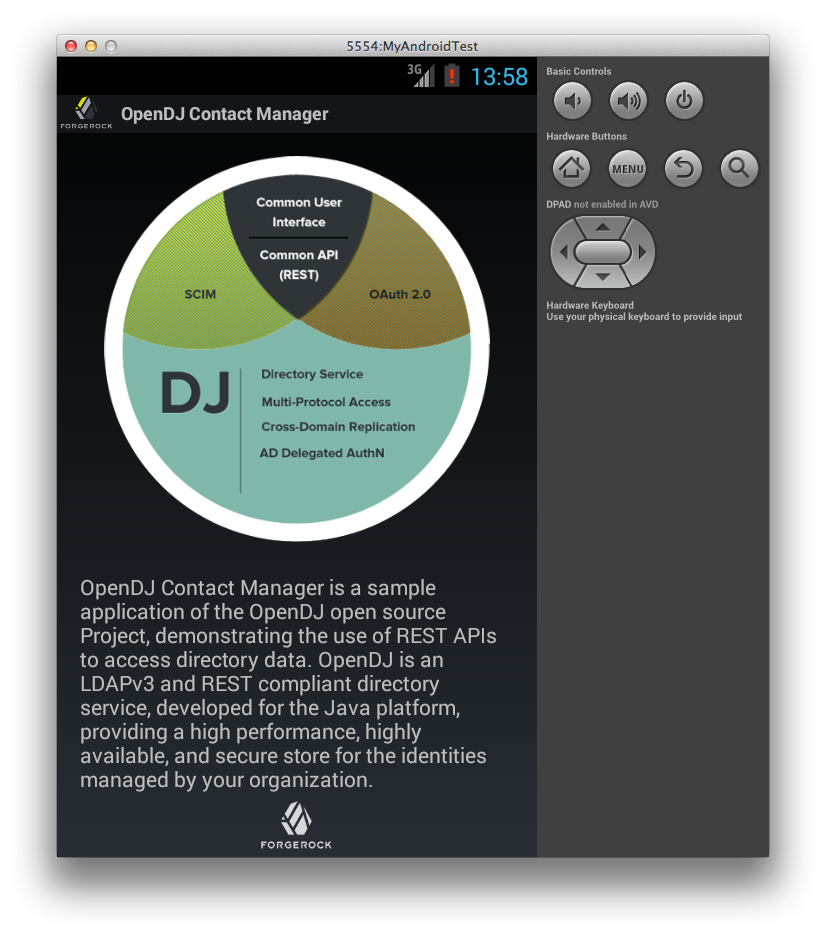
With OpenDJ 2.6.0, we’ve introduced a new way to access your directory data, using HTTP, REST and JSon. The REST to LDAP service, available either embedded in the OpenDJ server or as a standalone web application, is designed to facilitate the work of application developers. And to demonstrate the interest and the ease of use of that service, we’ve built a sample application for Android : the OpenDJ Contact Manager

OpenDJ Contact Manager Android AppAbout screen of the OpenDJ Contact Manager Android App

The OpenDJ Contact Manager is an open source Android application that was built by Violette, one of the ForgeRock engineer working in the OpenDJ team. You can get the source code from the SVN repository : https://svn.forgerock.org/commons/mobile/contact-manager/trunk. Mark wrote some quite complete documentation for the project, with details on how to get and build the application. He published it at http://commons.forgerock.org/mobile/contact-manager/.

The whole application is just about 4000 lines of code, and most of it is dealing with the display itself. But you can find code that deals with asynchronous calls to the OpenDJ rest interface, with paging through results, and parsing the resulting JSON stream to populate the Contacts, including photos. Et voila :

OpenDJ Contact Manager displaying a Contact

The application is just a sample but it clearly is usable in its current form and will allow once a contact was retrieved from the OpenDJ directory, to add it to the Contacts standard application, call the person, locate its address on maps, send the person an email, navigate through the management chain…

In future versions, we are planning to add support for OAuth 2.0, removing the need to store credentials in the application settings.

As it’s open source, feel free to play with it, hack and contribute back your changes.

LDAPCon 2013 – a summary…

ldapcon_2013_logo_line_dateLast Monday and Tuesday (Nov 18-19), I was in Paris attending the 4th International LDAP Conference, an event I help to organize with LDAPGTF, a network of French actors in the LDAP and Identity space. ForgeRock was also one of the 3 gold sponsors of the conference along with Symas and Linagora.

LDAPCon 2013The conference happens every other year and is usually organized by volunteers from the community. This year, the French guys were the most motivated, especially Clément Oudot from Linagora, leader of the LDAP Tool Box and lemonLDAP projects, and Emmanuel Lecharny one of the most active developers on Apache Directory Server.

I was honored to be the keynote and first speaker of the conference and presented “The Shift to Identity Relationship Management“, which was well received and raised a lot of interest from the audience.

The first day was focusing more on the users of LDAP and directory services technologies, and several presentations were made about REST interfaces to directory services, including the standard in progress: SCIM.

Kirian Ayyagari, from the Apache Directory project, presented his work on SCIM and the eSCIMo project. Present for the first time at LDAPCon, Microsoft’s  Philippe Beraud spoke about Windows Azure Active Directory and its Graph API. And I talked about and demoed the REST to LDAP service that we’ve built in OpenDJ. For the demo, I used PostMan, a test client for HTTP and APIs, but also our newly open sourced sample application for Android : OpenDJ contact manager. In the afternoon, Peter Gietz talked about the work he did around SPML and SCIM leveraging OpenLDAP access log.

After many talks about REST, we had a series of talk around RBAC. Shawn McKinney presented the Fortress open source IAM project and more specifically the new work being done around RBAC. Then Peter, Shawn and Markus Widmer talked about the effort to build a common LDAP schema for RBAC. And Matthew Hardin talked about the OpenLDAP RBAC overlay bringing policy decisions within the directory  when deploying Fortress.

Then followed presentations about local directory proxy services for security based on OpenLDAP, about Red Hat FreeIPA (another first appearance at LDAPCon) and about OpenLDAP configuration management with Apache Directory Studio. Also Stefan Fabel came all the way from Hawaii ( Aloha ! ) to present a directory based application for managing and reporting publications by a university: an interesting story about building directory schema and data model.

The day ended with a presentation from Clement Oudot about OpenLDAP and the password policy overlay. As usual, talking about the LDAP password policy internet-draft raises the question of when it will be finally published as an RFC. While there is a consensus that it’s important to have a standard reference document for it, I’m failing to see how we can dedicate resources to achieve that goal. Let’s see if someone will stand up and take the leadership on that project.

After such a long day of talks and discussion, most of the attendees converged to a nearby pub where we enjoyed beers and food while winding down the day through endless discussions.

The second day of LDAPCon 2013 was more focused on developers and the development of directory services. It was a mix of status and presentations of open source directory projects like OpenDJ, OpenLDAP or LSC, some discussions about backend services, performance design considerations and benchmarks, a talk about Spring LDAP… As usual, we had a little bit of a musical introduction to Howard Chu‘s presentation.

LP0_1068I enjoyed the Benchmark presentation by Jillian Kozyra, which was lively, rational and outlining the major difference between open source based products and closed source ones (although all closed source products were anonymized due to license restrictions). It’s worth noting that Jillian is pretty new in the directory space and she seems to have tried to be as fair as possible with her tests, but she did say that the best documented product and the easiest one to install and deploy is OpenDJ. Yeah !!! 🙂

Another interesting talk was Christian Hollstein‘s about his “Distributed Virtual Transaction Directory Server“, a telco grade project he’s working on to serve the needs of the 4G network services (such as HSS, HLR…). It’s clear to me that telco operators and network equipment providers are now all converging to LDAP technologies for the network and this drives a lot of requirements on the products (something I knew since we started the OpenDS project at Sun, kept in mind while developing OpenDJ, even though right now our focus has mainly been on the large enterprises and consumer facing directory services).

All the slides of the conference have been made available online through the LDAPCon.org website and the Lanyrd event page. Audio has also been recorded and will be made available once processed. And as usual, all the photos that I took during the conference are publicly available in my Flickr LDAPCon 2013 Set. Feel free to copy for personal use.

It’s been a great edition of the LDAPCon and I’m looking forward to the next one, in 2 years !

Meanwhile I’d like to thanks the sponsors, all 75 attendees, the 19th speakers and the 2 organizers I had not mentioned yet : M.C. Jonathan Clarke and Benoit Mortier.