I forgot to mention, but Guillaume, the lead developer for OpenIG, has also started a blog to discuss about Middleware, and share his experience and thoughts about OpenIG.
He has started a great series of posts introducing OpenIG, it’s use cases, some terminology…
In the article that I’ve posted yesterday, I’ve outline portions of configuration files for OpenIG. The configuration is actually only working with the latest OpenIG nightly builds, as it leverages some of the newest updates to the code.
One of the feedback that we got after we released was that configuring OpenIG was still too complex and verbose. So, we’ve made changes to the model, simplifying it, removing intermediate objects… The result is much smaller and easier to understand configuration files, but more importantly, easier to read back and understand the flow they represents.
My colleague Mark has done a great job of describing and illustrating those changes in a few articles :
Beside a cleaner look and feel and a long awaited reorganisation of content, the new version enables better collaboration around the open source projects and initiatives. You will find Forums, for general discussions or project specific ones, new Groups around specific topics like UMA or IoT. We’ve also added a calendar with different views, so that you can find or suggest events, conferences, webinars touching the projects and IRM at large.
Great work Aron and Marius for the new ForgeRock.org site ! Thank you.
And we’ve also announced a new project OpenUMA. If you haven’t paid attention to it yet, I suggest you do now. User-Managed Access (UMA) is an OAuth-based protocol that enables an individual to control the authorization of data sharing and service access made by others. The OpenUMA community shares an interest in informing, improving, and extending the development of UMA-compatible open-source software as part of ForgeRock’s Open Identity Stack.
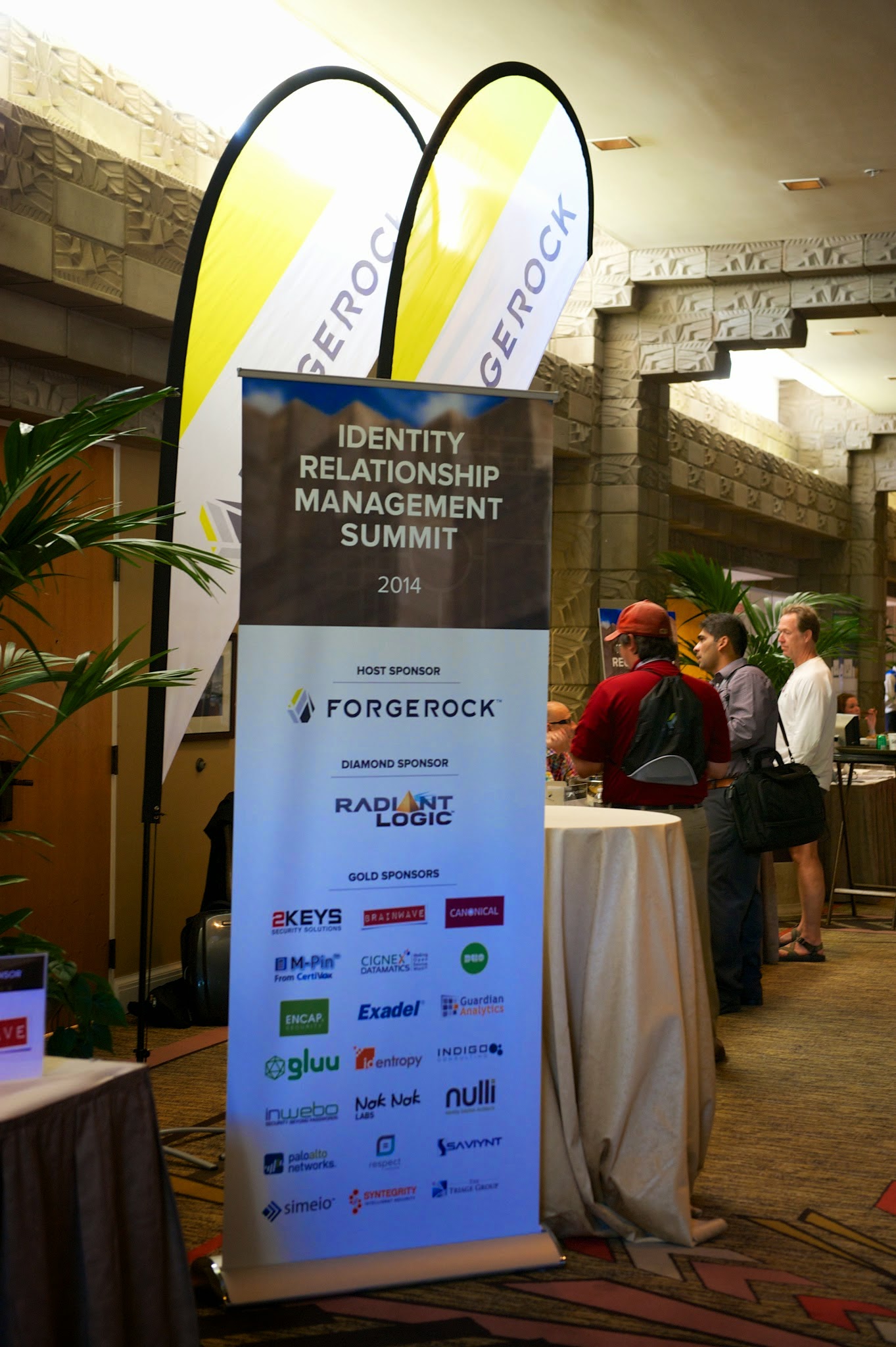
Last week at the nice Powerscourt Estate, outside Dublin, Ireland, ForgeRock hosted the European Identity Relationship Management Summit, attended by over 200 partners, customers, prospects, users of ForgeRock technologies. What a great European IRMSummit it was !
If you haven’t been able to attend, here’s some highlights:
I heard many talks and discussions about Identity being the cornerstone in the digital transformation of enterprises and organizations. It shifting identity projects from a cost center to revenue generators.
There was lots of focus on consumer identity and access management, with some perspectives on current identity standards and what is going to be needed from the IRM solutions. We’ve also heard from security and analytics vendors, demonstrating how ForgeRock’s Open Identity Stack can be combined with the network security layer or with analytics tools to increase security and context awareness when controlling access.
Many talks about Internet of Things and especially demonstration around defining the relationship between a Thing and a User, securing the access to the data produced by the Thing. We’ve seen a door lock being unlocked with a NFC enabled mobile phone, by provisioning over the air the appropriate credentials, a smart coffee machine able to identify the coffee type and the user, pushing the data to a web service, and asking the user for consent to share. There’s a common understanding that all the things will have identities and relations with other identities.
There were several interesting discussions and presentations about Digital Citizens, illustrated by reports from deployments in Norway, Switzerland, Nigeria, and the European Commission cross-border authentication initiatives STORK and eIDAS…
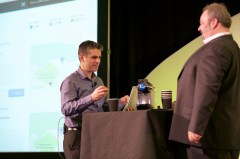
Half a day was dedicated to ForgeRock products, with introductory trainings, demonstrations of coming features in OpenAM, OpenDJ, OpenIDM and OpenIG. During the Wednesday afternoon, I did 2 presentations on OpenIG, demonstrating the ease of integration of OAuth2.0 and OpenID Connect to protect applications and APIs, and on OpenDJ, demonstrating the flexibility and power of the REST to LDAP interface.
All presentations and materials are available online as pdf and now as videos on the ForgeRock’s YouTube page. You can also find here a short summary of the Summit in a video produced by Markus.
The summit wouldn’t be such a great conference if there was no plan for social interactions and fun. This year we had a nice dinner in the Powerscourt house (aka the Castle) followed by live music in the pub. The band was great, but became even better when Joni and Eve joined them for a few songs, for the great pleasure of all the guests.
Of course, I have to admit that the best part of the IRM Summit in Ireland was the pints of Guinness !
To all attendees, thank you for your participation, the interesting discussions and the input to our products. I’m looking forward to see you again next year for the 2015 edition. Sláinte !
[Updated on Nov 11] Added link to the highlight video produced by Markus
[Updated on Nov 13] Added link to the slideshare folder where all presentations have been published
[Updated on Nob 24] Added link to the all videos on ForgeRock’s YouTube page
Starting Monday next week, at the Powerscourt Estate near Dublin, the European IRM Summit is just a few days away.
I’m polishing the content and demos for the 2 sessions that I’m presenting, one for each product that I’m managing: OpenDJ and OpenIG. Both take place on the Wednesday afternoon in the Technology Overview track.
If you’re still contemplating whether you should attend the event, check the finalised agenda. And hurry up to the Registration site ! I’m told there are a few remaining seats available, but they might not last for long!
I looking forward to seeing everyone next week in Ireland.
There are conferences and there are Conferences. The Conferences are the ones that you remember, because they happened in unusual places, because they’ve had a different atmosphere, you’ve met lots of friendly and bright persons. They are the ones you leave with the satisfaction of having learned something, having received value, and you’re looking forward to come back next year.
The IRM Summit is one of these Conferences. The next European IRM Summit is taking place in November, 3 – 5, near Dublin, Ireland, at the Powerscourt Estate pictured here. It’s a 2 days event where you can learn and discuss about the Identity Relationship Management space, standards, platforms, solutions…There will be many presentations, demos, trainings, plenty of time for discussions and meetings, a free half day Kantara Initiative workshop around “Trusted IDentity Exchange (TIDX)”, and some fun. I can already hear the fiddle, the pipes, the harp and smell the Guinness ! And I hope the weather will let us enjoy the wonderful garden.
Check out the agenda and the list of speakers, and don’t wait until last minute to register. While there are hundreds of rooms available, they are still counted and limited. Last year’s summit was sold out !
I’m looking forward to see you in beautiful Ireland !
OpenIG is not really a new project, as it’s been an optional module of OpenAM for the last 2 years. But with a new engineering team based in Grenoble, we’ve taken the project on a new trajectory and made a full product out of it.
OpenIG 3.0.0 was publicly released on August 11th and announced here and there. But as I was on holidays with the family, I had not written a blog post article about it.
So what is OpenIG and what’s new in the 3.0 release ?
OpenIG is a web and API access management solution that allows you to protect enterprise applications and APIs using open standards such as OAuth 2.0, OpenID Connect and SAMLv2.
Enhanced from the previous version are the Password Capture and Replay and SAMLv2 federation support features. But OpenIG 3.0 also brings several new features:
Support for OAuth 2.0 and OpenID Connect standard protocol to ease authentication and authorized access from clients, browsers, mobile devices and things
Support for scripting using the Groovy language to quickly develop complex flows
Support for protecting multiple applications or APIs with a single instance and splitting configuration in multiple dynamically reloaded files
Play with it and let us know how it is working for you, either by email, using a blog post or writing an article on our wiki. I will be reviewing them, relaying and advertising your work. And I’m also preparing a surprise for the authors of the most outstanding use cases !
My first goal was to setup the French subsidiary and start thinking of building a team to take on development of what we named a coming later OpenDJ.
4 years later, I look at where we are with ForgeRock and I feel amazed and really proud of what we’ve built. ForgeRock is now well established global business with several hundreds of customers across the globe, and plenty of opportunities for growth. The company has grown to more than 200 employees worldwide and still expanding. The ForgeRock Grenoble Engineering Center has moved to new offices end of May and counts 13, soon 14 employees and we’re still hiring.
Thanks to the ForgeRock founders for the opportunity and let’s keep rocking !!!
Since I’ve started working at ForgeRock, I’ve had hard times to explain to my non-technical relatives and friends, what we were building. But those days are over.
Thanks to our Marketing department, I can now refer them to our “ForgeRock Story” video :
Two weeks ago, the first IRM Summit took place in Phoenix AZ, at the amazing Arizona Biltmore. It was a great pleasure to meet with many friends and acquaintances, analysts and experts in the Identity space. Lots of conversations, ideas et food for thoughts !
And as usual, I’ve made all the photos that I’ve taken during the event available online, including the ForgeRock Partner event that happened the day earlier.
I hope to see you this fall at the European IRM Summit, in Luton Hoo, UK (more information should be available soon on the IRM Summit site or ForgeRock.com)
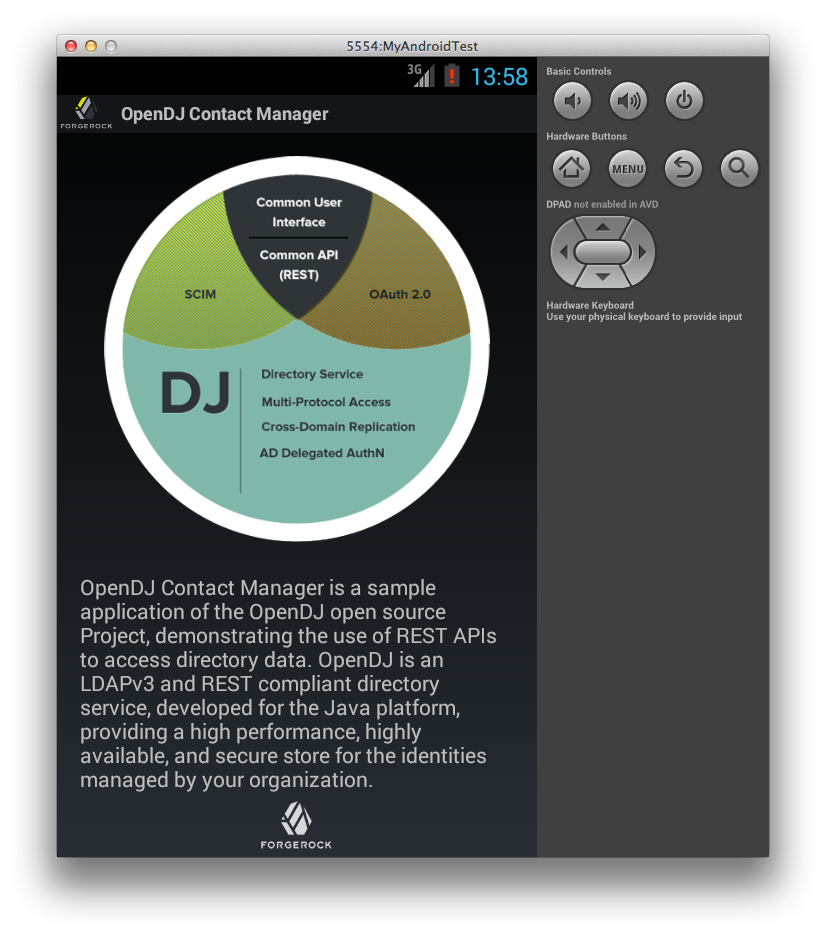
With OpenDJ 2.6.0, we’ve introduced a new way to access your directory data, using HTTP, REST and JSon. The REST to LDAP service, available either embedded in the OpenDJ server or as a standalone web application, is designed to facilitate the work of application developers. And to demonstrate the interest and the ease of use of that service, we’ve built a sample application for Android : the OpenDJ Contact Manager
The OpenDJ Contact Manager is an open source Android application that was built by Violette, one of the ForgeRock engineer working in the OpenDJ team. You can get the source code from the SVN repository : https://svn.forgerock.org/commons/mobile/contact-manager/trunk. Mark wrote some quite complete documentation for the project, with details on how to get and build the application. He published it at http://commons.forgerock.org/mobile/contact-manager/.
The whole application is just about 4000 lines of code, and most of it is dealing with the display itself. But you can find code that deals with asynchronous calls to the OpenDJ rest interface, with paging through results, and parsing the resulting JSON stream to populate the Contacts, including photos. Et voila :
The application is just a sample but it clearly is usable in its current form and will allow once a contact was retrieved from the OpenDJ directory, to add it to the Contacts standard application, call the person, locate its address on maps, send the person an email, navigate through the management chain…
In future versions, we are planning to add support for OAuth 2.0, removing the need to store credentials in the application settings.
As it’s open source, feel free to play with it, hack and contribute back your changes.
 I forgot to mention, but Guillaume, the lead developer for OpenIG, has also started a blog to discuss about Middleware, and share his experience and thoughts about OpenIG.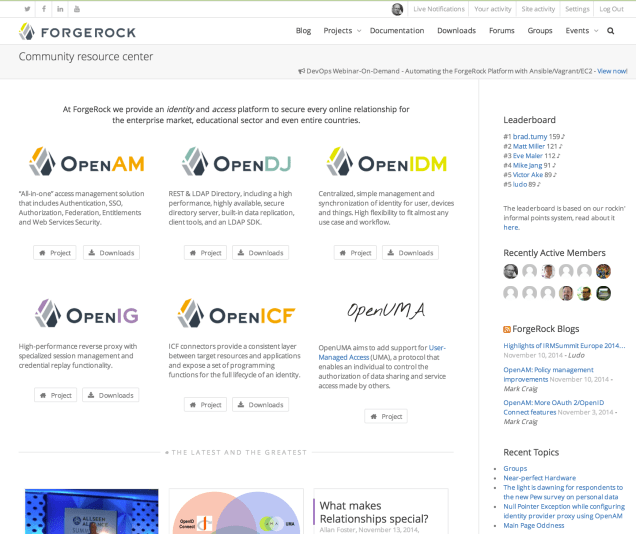
 And we’ve also announced a new project










 OpenIG 3.0.0 was publicly released on August 11th and announced





 Ludo Sketches